Introduction
Let’s start with an uncomfortable truth: 90% of marketing campaigns fail to meet their objectives.
If you’ve ever launched a campaign that looked great on paper but delivered disappointing results, you’re not alone. Most Nigerian businesses waste millions of naira every year on marketing that doesn’t work not because they lack creativity or budget, but because they lack structure.
The difference between campaigns that fail and campaigns that drive real business results isn’t luck. It’s engineering.
At FMC Agency, we’ve developed a proven campaign framework that removes guesswork from marketing and replaces it with a systematic approach that delivers measurable ROI. We call it the 6D Campaign Framework, and it’s the same process we use to build successful campaigns for leading brands across Lagos and Nigeria.
What You’ll Learn in This Guide
By the end of this article, you’ll understand:
- Why most marketing campaigns fail (and how to avoid these pitfalls)
- The complete 6D Campaign Framework used by professional agencies
- How to apply this framework to your own marketing campaigns
- Real examples of the 6D process in action
Whether you’re a marketing manager, business owner, or agency professional, this framework will transform how you approach campaign planning and execution.
Let’s dive in.
Why Most Marketing Campaigns Fail in Nigeria
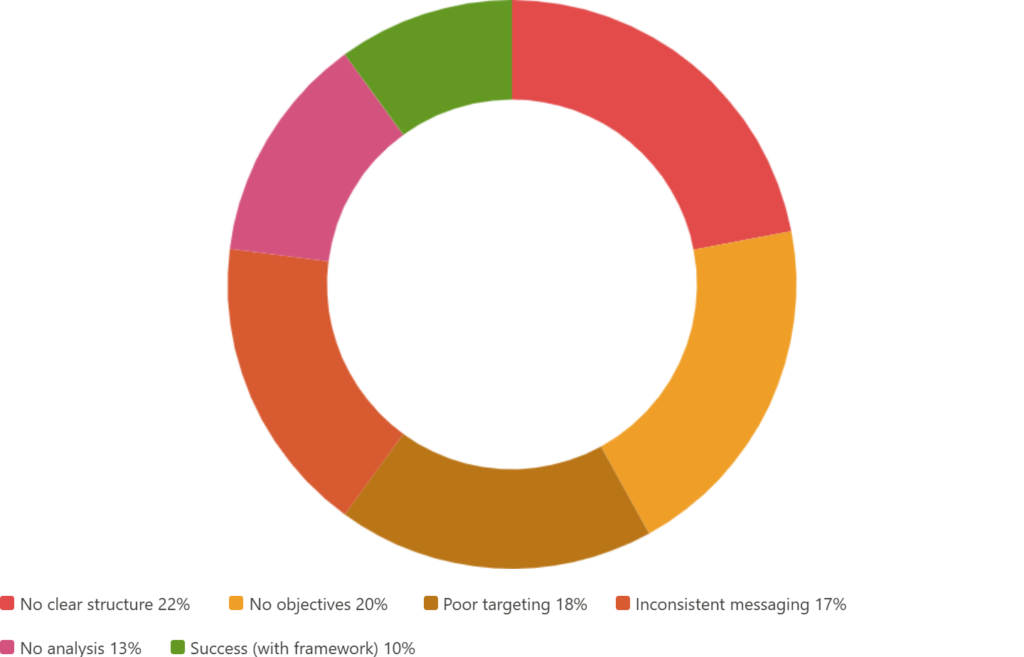
Before we explore what works, let’s examine why most campaigns don’t.
1. Lack of Clear Structure
Most campaigns start with a vague idea: “Let’s run some Instagram ads” or “We need a video campaign.” Without a structured approach, these ideas become disconnected tactics that don’t build toward a cohesive goal.
The Problem: Random marketing activities masquerading as strategy.
The Result: Wasted budget, confused messaging, and no clear path to ROI.
2. No Measurable Objectives
“We want more brand awareness” isn’t an objective it’s a wish. Effective campaigns start with specific, measurable targets: “Increase brand recall by 40% among 25-34 year-olds in Lagos within 90 days.”
The Problem: You can’t improve what you don’t measure.
The Result: No way to determine success or optimize performance.
3. Poor Audience Targeting
Many Nigerian businesses still practice “spray and pray” marketing broadcasting generic messages to everyone and hoping something sticks. This approach wastes resources and dilutes impact.
The Problem: Trying to speak to everyone means you connect with no one.
The Result: Low engagement, poor conversion rates, and marketing fatigue.
4. Inconsistent Messaging
When your campaign says one thing on Instagram, something different in outdoor ads, and another thing entirely in radio spots, you confuse your audience and weaken brand recall.
The Problem: Disconnected messages across channels create cognitive dissonance.
The Result: Diluted brand identity and reduced campaign effectiveness.
5. No Post-Campaign Analysis
The campaign ends, the team moves on to the next project, and no one examines what worked and what didn’t. This means you repeat the same mistakes in every campaign.
The Problem: No learning loop means no improvement.
The Result: Perpetual mediocrity and missed opportunities for optimization.
These failures aren’t inevitable. They’re the result of not having a proven campaign framework to guide your work.
That’s exactly what the 6D Framework solves.
The 6D Campaign Framework: A Complete Guide
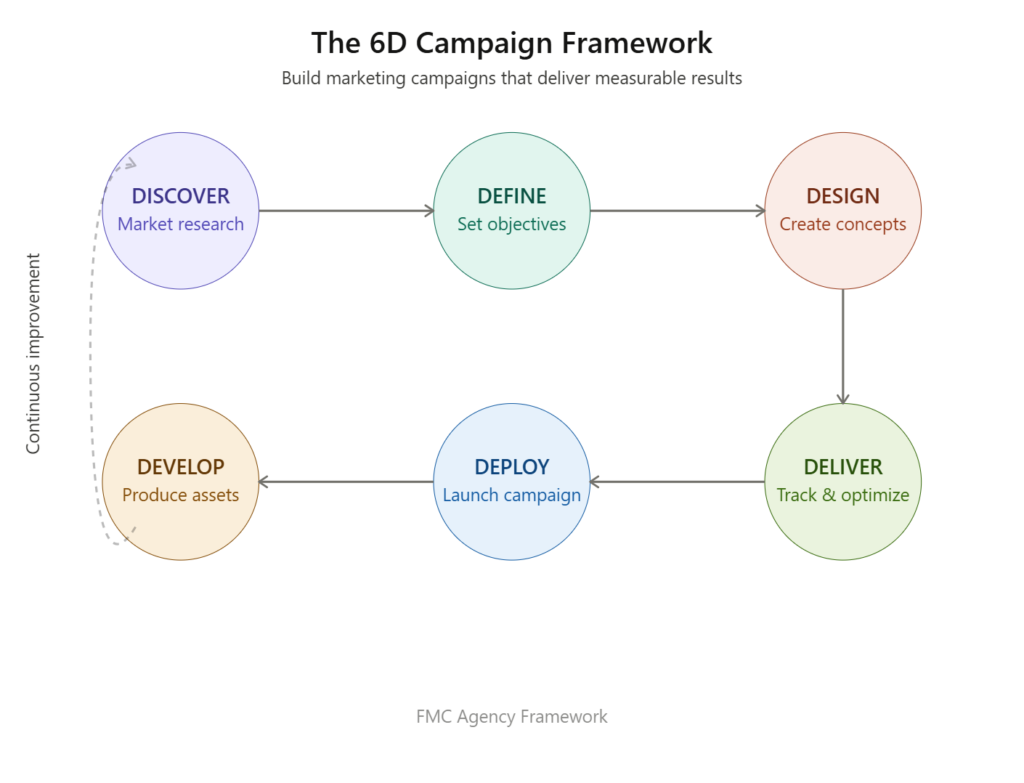
The 6D Campaign Framework is a systematic approach to building marketing campaigns that deliver measurable business results. Each “D” represents a critical stage in the campaign lifecycle, and skipping any stage significantly increases your risk of failure.
Let’s break down each stage in detail.
D1: DISCOVER — Research & Insight Gathering
Goal: Understand the market, audience, and competitive landscape before making any strategic decisions.
Great campaigns are built on insights, not assumptions. The Discover phase is where you gather the intelligence that will inform every subsequent decision.
Market Research Methodologies
Desk Research:
- Industry reports and trend analysis
- Economic indicators affecting your category
- Regulatory changes (especially important in Nigeria)
- Media consumption patterns
Primary Research:
- Focus groups with target audiences
- In-depth interviews with customers
- Online surveys and polls
- Social listening across Nigerian platforms
Data Analysis:
- Customer behavior patterns
- Purchase triggers and barriers
- Seasonal trends in your category
- Regional differences across Nigerian markets
Audience Insight Gathering
Understanding your audience goes beyond demographics. You need psychographics their motivations, fears, aspirations, and decision-making processes.
Key Questions to Answer:
- What problems does our audience face daily?
- What language and cultural references resonate with them?
- Where do they consume media? (Lagos vs Abuja vs Port Harcourt habits differ)
- What influences their purchasing decisions?
- What are their objections to buying from us?
Nigerian Context Considerations:
- Economic realities (purchasing power, payment preferences)
- Cultural values (family influence, community validation)
- Regional differences (North vs South vs Southeast preferences)
- Language nuances (English vs Pidgin vs local languages)
Competitive Analysis
Who Are Your Real Competitors? Look beyond direct competitors. In Nigeria, you’re often competing with informal alternatives, imported options, and customer inertia.
What to Analyze:
- Competitor messaging and positioning
- Their campaign themes and frequency
- Media channel mix
- Creative approaches
- Audience engagement levels
- Pricing and promotional strategies
Trend Identification
Consumer Trends:
- Shift toward mobile-first experiences
- Growing demand for locally-relevant content
- Rise of social commerce in Nigeria
- Increasing skepticism toward traditional advertising
Media Trends:
- TikTok and short-form video dominance
- Podcast growth among professionals
- Decline of traditional print (but not outdoor)
- Influencer marketing maturation
Technology Trends:
- Mobile payment integration
- WhatsApp Business adoption
- AI-driven personalization
- Location-based marketing opportunities
Deliverables from D1:
- Market research report
- Audience personas (3-5 detailed profiles)
- Competitive landscape analysis
- Trend report with implications
- Insights brief summarizing key findings
D2: DEFINE — Strategy & Objective Setting
Goal: Transform insights into clear strategic direction with measurable objectives.
This is where you move from “what is” (Discover) to “what should be” (Define). Every strategic decision made in this phase must be grounded in the insights from D1.
Setting SMART Objectives
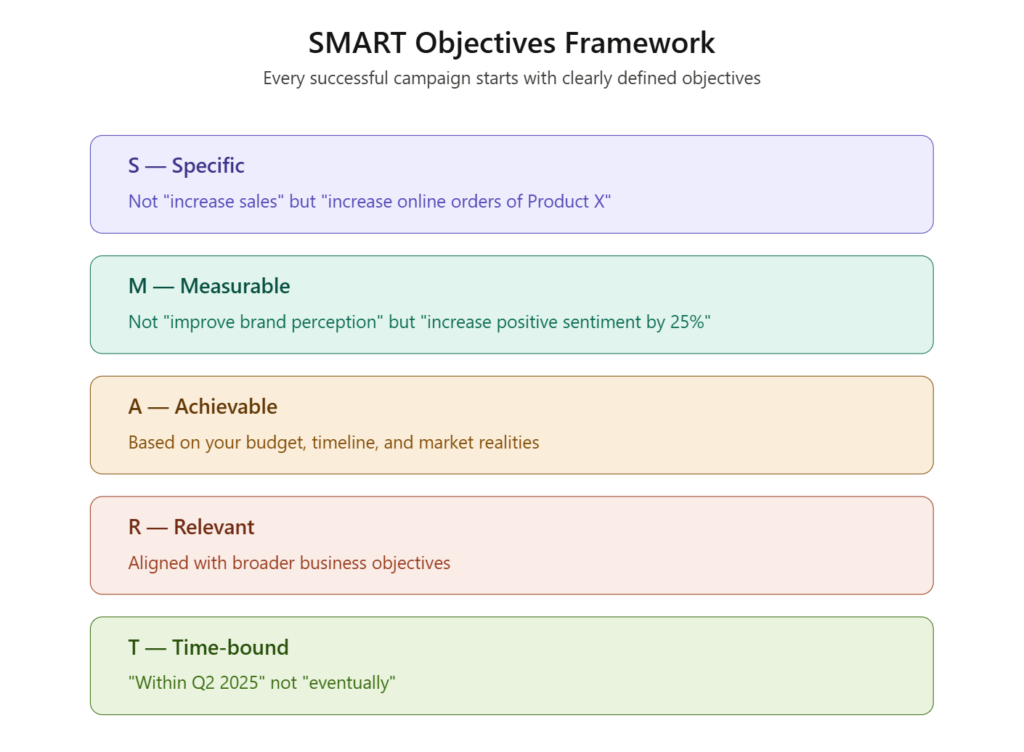
Vague goals lead to vague results. Your campaign objectives must be:
S – Specific: Not “increase sales” but “increase online orders of Product X”
M – Measurable: Not “improve brand perception” but “increase positive brand sentiment by 25%”
A – Achievable: Based on your budget, timeline, and market realities
R – Relevant: Aligned with broader business objectives
T – Time-bound: “Within Q2 2025” not “eventually”
Example SMART Objectives:
- Generate 500 qualified leads for our Lagos showroom within 60 days
- Increase brand awareness from 15% to 40% among 25-34 year-olds in Lagos by June 30
- Drive 200 new customers to trial our service with a 30% conversion rate to paid plans within 90 days
Positioning Strategy
How will you differentiate your brand in the market?
Positioning Framework:
- Target Audience: Who specifically are you positioning for?
- Category: What category do you compete in?
- Point of Difference: What makes you uniquely valuable?
- Reason to Believe: Why should they believe your claim?
Example: “For busy Lagos professionals [audience] seeking reliable meal delivery [category], FoodCo is the service [brand] that guarantees hot meals in under 30 minutes [difference] because we have strategically located kitchens across every major Lagos axis [proof].”
Key Message Development
Core Message: Your single most important point what you want audiences to remember
Supporting Messages: 3-5 pillars that reinforce your core message
Proof Points: Evidence, testimonials, data that validate your claims
Messaging Hierarchy:
- Core campaign idea (umbrella message)
- Key benefit messages (what’s in it for them)
- Feature/product messages (what you do)
- Brand values (who you are)
Success Metrics
Define exactly how you’ll measure success:
Awareness Metrics:
- Reach and impressions
- Brand recall and recognition
- Share of voice
- Website traffic
Engagement Metrics:
- Social media interactions
- Content consumption (video views, time on page)
- Click-through rates
- Email open and engagement rates
Conversion Metrics:
- Lead generation
- Sales or trial signups
- Store visits
- Purchase intent scores
Business Impact Metrics:
- Revenue generated
- Customer acquisition cost
- Return on ad spend (ROAS)
- Customer lifetime value
Deliverables from D2:
- Campaign strategy document
- SMART objectives matrix
- Positioning statement
- Messaging framework
- KPI dashboard template
D3: DESIGN — Creative Concept Development
Goal: Translate strategy into compelling creative that captures attention and drives action.
This is where strategy meets creativity. Your creative work must be both distinctive (so it breaks through clutter) and aligned with strategy (so it delivers results).
Creative Concept Development
The Big Idea: Your campaign needs a unifying creative concept a big idea that can be expressed across multiple channels and touchpoints while remaining recognizable and memorable.
Strong Campaign Concepts Are:
- Simple: Easily explained in one sentence
- Surprising: Unexpected enough to capture attention
- Emotional: Connects on a human level
- Relevant: Speaks directly to audience insights
- Ownable: Unique to your brand
- Extensible: Works across multiple channels and formats
Creative Development Process:
- Review insights and strategy
- Brainstorm multiple concepts (aim for 20+ rough ideas)
- Shortlist 3-5 strongest concepts
- Develop each concept with sample executions
- Present concepts with strategic rationale
- Refine selected concept based on feedback
Visual Identity Creation
Campaign Visual System:
- Color palette (primary, secondary, accent colors)
- Typography (headline fonts, body fonts)
- Photography or illustration style
- Graphic elements and patterns
- Logo treatment and lockups
Nigerian Cultural Considerations:
- Color symbolism varies by region and culture
- Visual references that resonate locally
- Representation matters (diverse casting, authentic settings)
- Balance between global aesthetics and local relevance
Brand Guidelines
Create a campaign style guide that ensures consistency:
Include:
- Logo usage rules
- Color specifications (RGB, CMYK, HEX)
- Typography guidelines
- Image style and cropping rules
- Tone of voice examples
- Do’s and don’ts
This document becomes the reference for every team member and vendor working on the campaign.
Mood Boards & Mockups
Mood Boards: Visual collages that capture the campaign’s aesthetic direction, emotional tone, and stylistic references
Mockups: Preliminary versions of campaign materials showing how the concept translates to:
- Social media posts
- Outdoor billboards
- Digital banners
- Print ads
- Video concepts (storyboards)
- Website landing pages
Deliverables from D3:
- 3-5 creative concept presentations
- Final approved creative concept
- Campaign visual identity system
- Brand guidelines document
- Mood boards
- Mockups across key channels
D4: DEVELOP — Content Production & Asset Creation
Goal: Produce all campaign assets to the highest quality standards.
This is the execution phase where your creative concepts become tangible campaign materials ready for deployment.
Content Production
Video Production:
- Scripting and storyboarding
- Location scouting (authentic Nigerian settings)
- Casting (representative of target audience)
- Filming and direction
- Post-production (editing, color grading, sound design)
- Multiple format exports (16:9, 9:16, 1:1 for different platforms)
Photography:
- Product photography
- Lifestyle imagery
- Behind-the-scenes content
- User-generated content curation
Copywriting:
- Headlines and taglines
- Body copy for all formats
- Social media captions
- Email campaigns
- Radio scripts
- Print ads
- Website content
Design Assets:
- Social media graphics (feed posts, stories, carousels)
- Display ads (multiple sizes)
- Print materials (flyers, posters, brochures)
- Outdoor advertising (billboards, transit ads)
- Point-of-sale materials
- Email templates
Quality Control
Review Checklist:
- ✓ Brand guidelines adherence
- ✓ Message consistency across materials
- ✓ Spelling and grammar
- ✓ Legal and regulatory compliance
- ✓ Cultural sensitivity review
- ✓ Technical specifications met
- ✓ Accessibility considerations
Nigerian-Specific Checks:
- APCON approval for relevant materials
- Appropriate representation and inclusivity
- Language appropriateness (formal vs Pidgin context)
- Cultural references accuracy
- Regional variations if needed
Asset Organization
Digital Asset Management:
- Centralized storage system
- Clear naming conventions
- Version control
- Access permissions
- Backup protocols
File Delivery Formats:
- Master files (high-resolution, editable)
- Print-ready files (CMYK, with bleed)
- Digital files (RGB, web-optimized)
- Social media specs (platform-specific sizes)
Deliverables from D4:
- Complete asset library
- Campaign production book (all materials catalogued)
- Asset delivery matrix
- Quality control sign-off documents
- Launch-ready materials
D5: DEPLOY — Campaign Launch & Rollout
Goal: Execute flawless campaign launch across all channels with perfect timing and coordination.
This is where all your planning comes to life. A smooth deployment requires meticulous coordination and contingency planning.
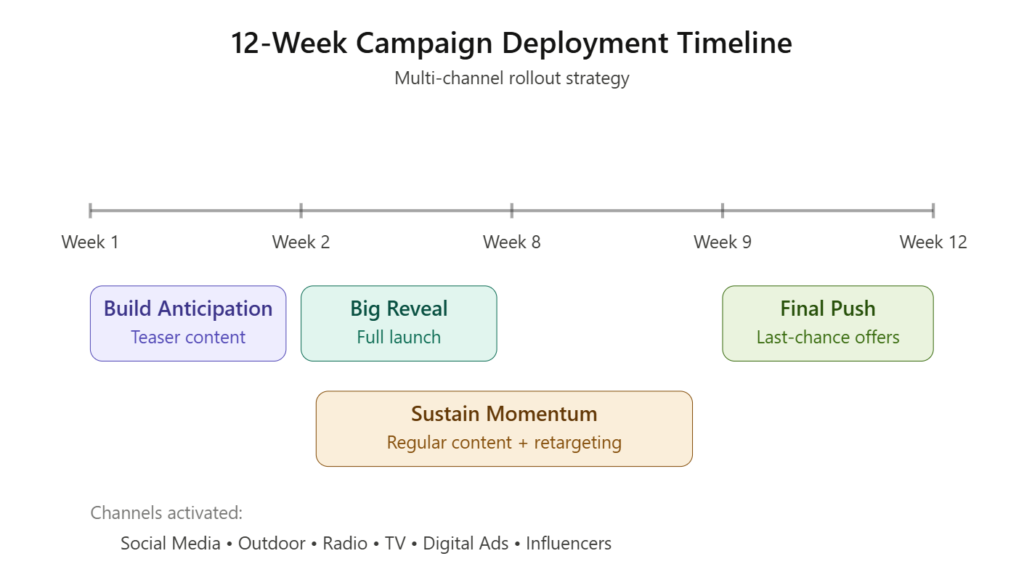
Multi-Channel Rollout Strategy
Channel Sequencing:
Week 1 – Build Anticipation:
- Teaser content on social media
- Email to existing database
- Influencer seeding
Week 2 – Big Reveal:
- Full campaign launch across all channels
- PR push and media coverage
- Outdoor advertising goes live
- Paid media amplification begins
Week 3-8 – Sustain Momentum:
- Regular content cadence
- Retargeting engaged audiences
- User-generated content activation
- Mid-campaign refresh
Week 9-12 – Final Push:
- Last-chance messaging
- Amplified offers or incentives
- Case studies and testimonials
Timing & Sequencing
Lagos Business Hours Optimization:
- Peak engagement times: 7-9 AM (commute), 12-2 PM (lunch), 6-10 PM (evening)
- Avoid launching campaigns on Mondays (people catching up)
- Best launch days: Tuesday-Thursday
- Consider religious observances (Friday prayers, Sunday services)
- Account for Lagos traffic patterns (campaign visibility times)
Seasonal Considerations:
- Avoid December for B2B campaigns (most decision-makers are unavailable)
- January: High optimism, budget availability
- Back-to-school periods (September): Family-focused spending
- Salary cycles: Campaign intensity around end-of-month
Budget Allocation
Media Mix Modeling: Allocate budget based on channel effectiveness and audience behavior:
Sample Budget Split:
- Digital (40%): Social ads, search, display, video
- Traditional (30%): TV, radio, outdoor
- Activations (20%): Events, sampling, experiential
- Content & Influencer (10%): Ongoing content production
Pacing Strategy:
- Front-load 40% of budget in first 30% of campaign period
- Reserve 20% for optimization and amplification
- Hold 10% contingency for unexpected opportunities
Team Coordination
Campaign War Room:
- Daily stand-ups during launch week
- Real-time performance monitoring
- Quick decision-making protocols
- Clear escalation paths
Responsibility Matrix (RACI): For every campaign activity, define:
- Responsible: Who executes
- Accountable: Who approves
- Consulted: Who provides input
- Informed: Who needs to know
Deliverables from D5:
- Channel rollout schedule
- Media buy confirmations
- Launch checklist (pre-flight checks)
- Team coordination documents
- Crisis management protocols
D6: DELIVER — Performance Tracking & Optimization
Goal: Monitor campaign performance, optimize in real-time, and deliver measurable results.
The campaign is live but the work isn’t done. The Deliver phase is where you ensure your campaign achieves its objectives through constant monitoring and optimization.
Performance Tracking
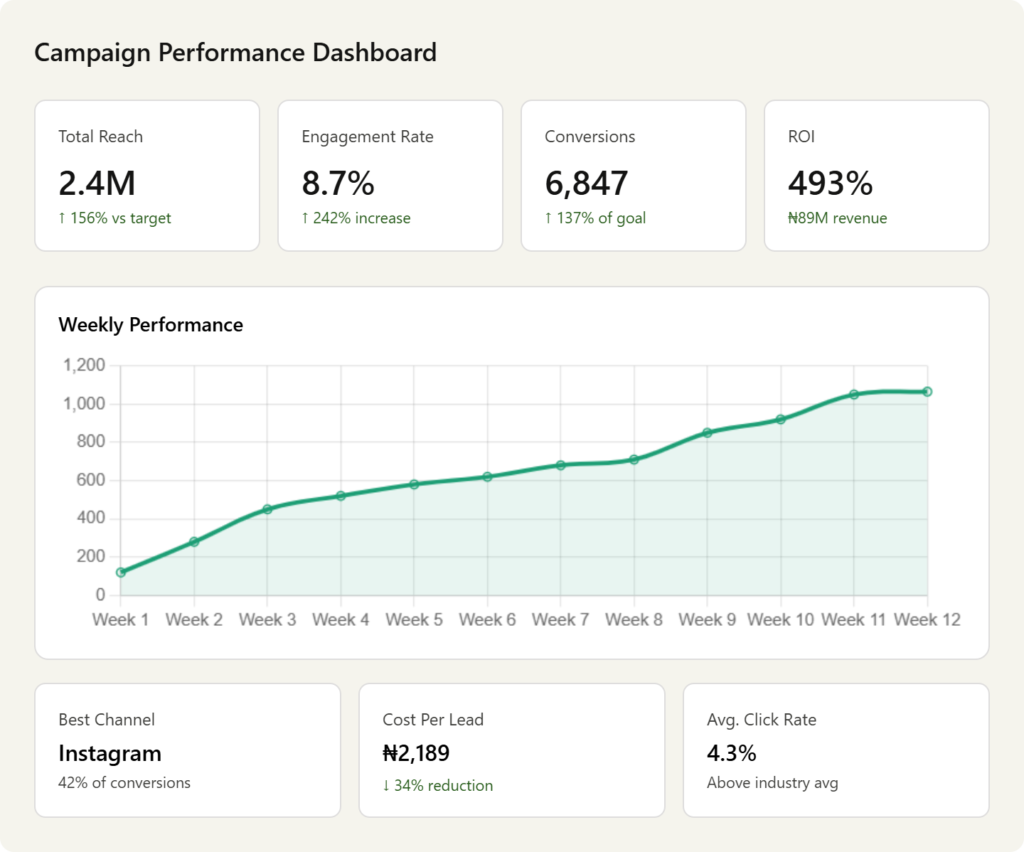
Real-Time Dashboards:
Set up live dashboards tracking:
- Reach and impressions (across all channels)
- Engagement rates (likes, comments, shares, clicks)
- Traffic sources and behavior (website analytics)
- Conversion rates (leads, sales, signups)
- Cost metrics (CPC, CPM, CPL, CPA)
Tracking Tools:
- Google Analytics for website behavior
- Social media native analytics
- Ad platform dashboards (Meta Ads Manager, Google Ads)
- Call tracking software
- CRM integration for lead tracking
- Sales attribution models
Reporting Cadence:
- Daily: During launch week, monitor core metrics
- Weekly: Performance review and optimization decisions
- Bi-weekly: Stakeholder updates
- End of Campaign: Comprehensive results report
Real-Time Optimization
What to Optimize:
Underperforming Creative:
- Swap out low-performing ad variants
- Test new headlines, visuals, or calls-to-action
- A/B test different creative approaches
Audience Refinement:
- Exclude audiences with high cost/low conversion
- Expand successful audience segments
- Adjust demographic targeting based on performance
Budget Reallocation:
- Move budget from weak channels to strong performers
- Increase investment in high-performing placements
- Pause ineffective campaigns
Bidding & Pacing:
- Adjust bids for better placement
- Modify daily budgets to capture more volume
- Change bidding strategies (CPC to CPM, etc.)
Nigerian Market Adjustments:
- Shift budget to Lagos if performance is strongest there
- Adjust messaging for different regional responses
- Modify media mix based on actual consumption patterns
Results Reporting
Campaign Performance Report Should Include:
1. Executive Summary (1 page):
- Campaign objectives
- Key results vs targets
- Major wins and learnings
- ROI summary
2. Performance Metrics (2-3 pages):
- Awareness metrics (reach, impressions, brand lift)
- Engagement metrics (CTR, video completion, social interactions)
- Conversion metrics (leads, sales, signups)
- Efficiency metrics (CPA, ROAS, CPL)
3. Channel Breakdown (2-3 pages):
- Performance by channel (social, search, outdoor, TV, radio)
- Top performing placements
- Audience insights
4. Creative Performance (1-2 pages):
- Best performing assets
- A/B test results
- Message resonance
5. Learnings & Recommendations (1-2 pages):
- What worked and why
- What didn’t work and why
- Recommendations for future campaigns
ROI Calculation
Marketing ROI Formula:
ROI = (Revenue Generated - Campaign Cost) / Campaign Cost x 100Example: Campaign cost: ₦10,000,000 Revenue generated: ₦35,000,000 ROI = (₦35M – ₦10M) / ₦10M × 100 = 250% ROI
Beyond Revenue: Not all campaigns directly drive immediate sales. Calculate value for other metrics:
- Cost per lead acquisition
- Customer lifetime value of acquired customers
- Brand awareness increase (quantify through brand studies)
- Social media following growth (assign value per follower)
- Earned media value
Deliverables from D6:
- Real-time performance dashboards
- Weekly optimization reports
- End-of-campaign results presentation
- ROI analysis
- Campaign learnings document
Case Study: The 6D Framework in Action
The Challenge
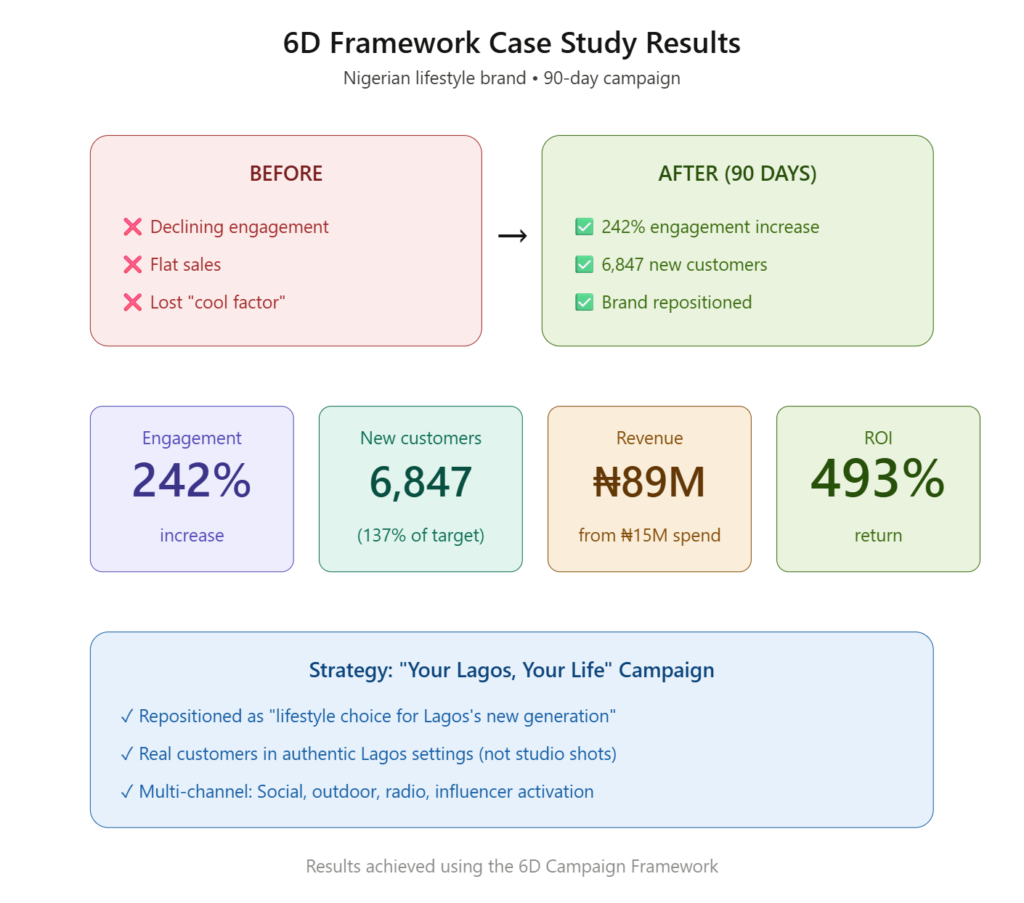
A leading Nigerian lifestyle brand approached FMC Agency with a problem: they were investing heavily in marketing but seeing declining engagement and flat sales. Their campaigns looked good but weren’t delivering business results.
Previous campaigns were reactive, inconsistent, and lacked strategic direction.
The 6D Solution
D1 – Discover: Our research revealed their target audience (25-35 year-old urban professionals) felt the brand had become “too corporate” and lost its cool factor. Competitive analysis showed rivals were dominating social conversation through user-generated content and community building.
D2 – Define: We set a clear objective: Increase brand engagement by 200% and drive 5,000 new customers within 90 days. Our positioning strategy repositioned the brand as “the lifestyle choice for Lagos’s new generation of achievers.”
D3 – Design: We developed a campaign concept around “Your Lagos, Your Life” celebrating the unique ways young Lagosians navigate the city. The creative featured real customers in authentic Lagos settings, not staged studio shots.
D4 – Develop: We produced 30+ pieces of content: short documentary-style videos, Instagram Stories, outdoor ads at key Lagos locations, and a microsite featuring customer stories.
D5 – Deploy: Launched with a coordinated push across social media, outdoor advertising on major Lagos routes, radio spots during drive time, and an influencer activation. The campaign rolled out over 12 weeks with weekly content themes.
D6 – Deliver: Weekly optimization shifted budget to Instagram and outdoor (strongest performers). Real-time adjustments to messaging based on audience feedback. We exceeded every objective.
The Results
- 242% increase in social media engagement
- 6,847 new customers acquired (137% of target)
- ₦89 million in attributed revenue from ₦15 million investment
- 493% ROI
- 68% increase in positive brand sentiment
Most importantly: the client now had a repeatable framework for future campaigns, not just a one-time success.
Conclusion: Why the 6D Framework Works
Marketing campaigns fail when they skip steps, make assumptions instead of doing research, or prioritize creativity over strategy. The 6D Campaign Framework succeeds because it:
✅ Eliminates guesswork through systematic research and insight gathering ✅ Ensures strategic alignment by defining clear objectives before creative development ✅ Maintains consistency through structured guidelines and quality control ✅ Enables optimization through continuous performance monitoring ✅ Delivers measurable results that can be tied directly to business outcomes
Whether you’re a small business launching your first major campaign or an established brand looking to improve campaign performance, the 6D Framework provides the structure you need to build marketing that actually works.
Ready to Transform Your Marketing Campaigns?
At FMC Agency, we’ve used the 6D Campaign Framework to build successful campaigns for leading brands across Lagos and Nigeria. If you’re tired of marketing that doesn’t deliver results, let’s talk.
Book a free strategy consultation: 📞 +234 704 789 4708 📧 info@thefmcagency.com 🌐 thefmcagency.com
We’ll review your current marketing approach and show you exactly how the 6D Framework can improve your results.
Frequently Asked Questions
Q: How long does it take to implement the 6D Framework for a campaign? A: Timeline depends on campaign scope, but a typical 12-week campaign breaks down as: D1 (2 weeks), D2 (1 week), D3 (2 weeks), D4 (3 weeks), D5 (2 weeks), D6 (ongoing throughout campaign). Rush campaigns can be condensed but shouldn’t skip phases.
Q: Can I apply the 6D Framework to small campaigns or just big brand campaigns? A: The 6D Framework scales to any budget. Even a ₦500,000 social media campaign benefits from structured research, clear objectives, and performance tracking. The depth of each phase adjusts to budget, not the structure itself.
Q: What if I don’t have budget for extensive research in D1? A: Start with desk research, social listening, and existing customer data. Even 3-5 customer interviews provide valuable insights. The key is making decisions based on some research rather than pure assumptions.
Q: How do I get stakeholder buy-in for this structured approach? A: Show them this case study section. Emphasize that the framework reduces risk and increases ROI by replacing guesswork with strategy. Most stakeholders appreciate structure once they see the business case.
Q: Can this framework work for B2B campaigns in Nigeria? A: Absolutely. The 6D Framework works for any campaign type B2B, B2C, awareness, conversion, product launch, etc. The principles remain the same; only the tactics and channels adjust.
Q: What tools do I need to implement the 6D Framework? A: Basic implementation requires: Google Analytics, social media analytics tools, a project management system (Asana, Trello), and reporting/presentation software. Advanced implementation benefits from paid tools like SEMrush, Hootsuite, or marketing automation platforms.
About the Author: FMC Agency is a full-service marketing and communications agency based in Lagos, Nigeria, specializing in strategic campaign development for brands that value measurable results. Learn more at thefmcagency.com.